

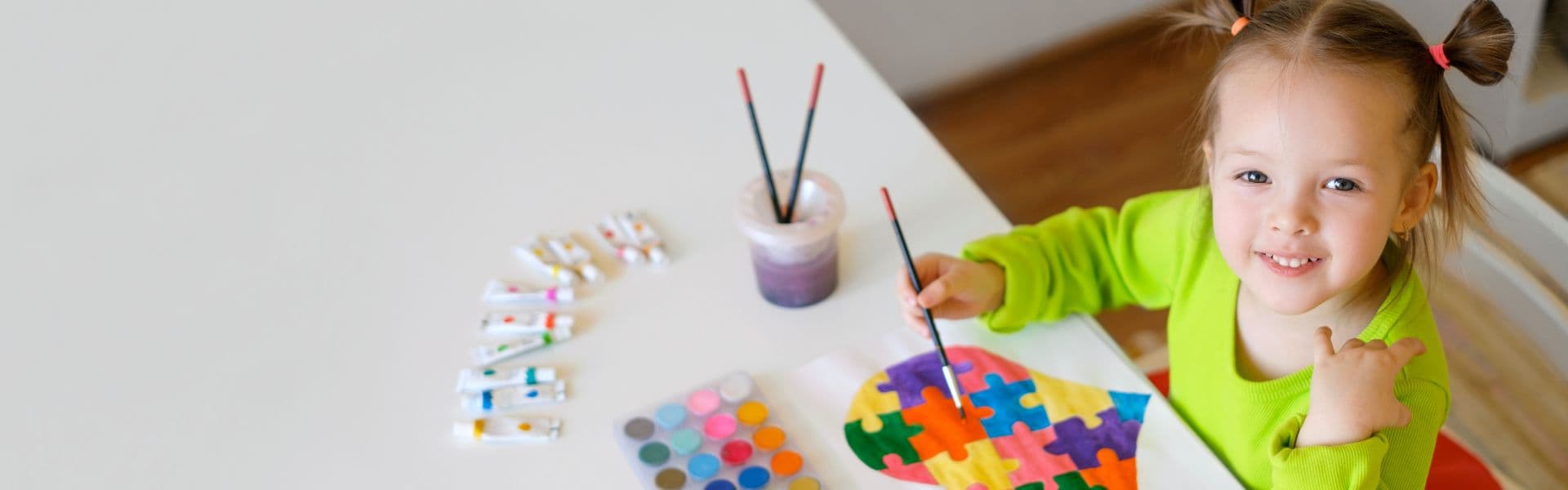
Autism spectrum disorders (ASD)
Autism Spectrum Disorder (ASD) is a neurodevelopmental disorder that affects the way a person perceives the world and interacts with others.
What is autism spectrum disorder (ASD)?
Autism spectrum disorder (ASD) is a neurodevelopmental disorder that affects how a person perceives the world and interacts with others. Repetitive behaviors, as well as restricted and intense interests in certain subjects, rigid routines, and the repetition of certain movements or actions are also common in people with ASD.
The autism spectrum is considered one of the most common developmental disorders in children. According to the World Health Organization (WHO), about 1 in 160 children worldwide is diagnosed with ASD.
ASD cases are often detected at a young age. Some signs sometimes appear in the first years of life as unusual compared with typical child development. One may notice developmental delay, difficulties with social reciprocity, an inflexible adherence to routines, deficits in nonverbal behaviors and problems with nonverbal and verbal communication.
Each child with ASD is unique and has individual characteristics that vary in severity and clinical presentation. It is necessary for a qualified professional to evaluate the child to understand their specific needs and provide appropriate support. In addition, taking into account environmental and genetic factors that can influence the expression of ASD and the fact that it can be associated with other developmental disorders is essential.
How is ASD detected and what are the symptoms?
It is important to recognize early signs of ASD in order to intervene quickly with appropriate approaches. Early detection allows the child and their family to receive suitable support and services to promote development and improve social and communication skills.
Detection of ASD is based on observing characteristic symptoms that affect communication, social interactions, and behaviors. These manifestations can vary in severity and individual expression.
In the area of communication, signs of language disorder may be observed, including difficulties establishing and maintaining social connections, deficits in verbal and nonverbal communication such as language problems, a limited understanding of social nuances, as well as restricted use of gestures, eye contact and facial expressions.
Interactions with peers can also be affected, with difficulties developing relationships with peers, understanding others’ emotions and intentions, and adapting to social norms. Some people with ASD may prefer solitude or have difficulty sharing interests and social activities.
Repetitive and restricted behaviors are common. For example, the development of specific and restricted interests, the maintenance of rigid routines and excessive reactions to changes in the environment are frequent. Stereotyped behaviors, such as repetitive body movements, may also be observed.
It is also possible to detect sensory symptoms, since some people with ASD experience hypersensitivity or hyposensitivity to certain sensory stimuli such as light, sound, touch or taste.
Assessment and diagnostic process of ASD
First, the diagnosis of autism spectrum disorder is made by a physician specialized in neurodevelopmental disorders, a neuropsychologist or a pediatrician. During the consultation, you can discuss your concerns and observations regarding the person’s behaviors and development.
It is important to provide the physician with detailed information about medical history, observed behaviors, the child’s development and current concerns. Keeping a journal of relevant behaviors and noting specific examples can be helpful.
The physician will carry out a thorough clinical assessment, which begins with a complete medical examination performed in order to rule out other medical conditions presenting symptoms similar to ASD. The assessment may include interviews with the person being evaluated and their relatives, standardized questionnaires, direct observations and specific tests. Genetic tests, blood tests and a physical examination may be performed. A clinical interview is then conducted with the person being evaluated and their relatives to collect detailed information about their medical history, development, observed behaviors and current concerns.
Making a diagnosis is a complex process that involves a team of specialized health professionals, such as psychiatrists, psychologists, speech therapists and special education specialists. Diagnostic criteria focus on deficits in the areas of social communication, social interactions and repetitive or restricted behaviors. To establish a diagnosis of ASD, a person must present symptoms in these areas and these symptoms must have a significant impact on their daily functioning.
Standardized tools and questionnaires are used to assess the person’s development in the three areas mentioned above. The DSM-5 (Diagnostic and Statistical Manual of Mental Disorders, fifth edition) is also used as one of the reference tools and includes specific diagnostic criteria for ASD.
As needed, the physician may refer the person for further assessment by other health professionals. These may include psychologists, speech therapists, occupational therapists or special education specialists. Once all assessments have been completed, the professionals involved will review the results to determine whether the diagnostic criteria for ASD are met. They will take into account the various observations, completed questionnaires and test results to reach a diagnostic conclusion.
The collected information allows for an accurate diagnosis to be made and for the development of a treatment plan adapted to the needs of the person evaluated. A comprehensive assessment carried out by qualified professionals, such as psychiatrists, psychologists or specialists in neurodevelopmental disorders, is essential to establish an accurate diagnosis of ASD. DSM-5 criteria are used in combination with other assessments, questionnaires, interviews and clinical observations to arrive at a complete and reliable diagnosis.
Where to start?
The Familio clinic is here to support you in this process. Starting with careful observation of unusual behaviors, communication difficulties and social interaction can be the first step. Do not hesitate to make an appointment promptly with our experts. They are available to conduct a comprehensive evaluation of your child, taking into account their development, behaviors and specific needs.
Early detection and an accurate diagnosis are essential to provide your child with the necessary support and to develop an appropriate intervention plan. Do not hesitate to contact us to get help in this important stage of your child’s life.

Our professionals
Sonia Ben Jemaa
Neuropsychologist
Alexe Boivin Mercier
Neuropsychologist
Haisha Maxi
Social worker
Dominique Roy
Special education teacher
Catherine Doucet
Psychoeducator
Janie Degré Pelletier
Neuropsychologist
Kevin Bastien
Neuropsychologist
Kathleen Leboeuf
Psychosocial counsellor
Nathalie Turmel
Psychoeducator
Émeline Jean
Psychologist
Émeline Jean
Psychologist
Maghali Gagné
Social worker
The Familio advantage
Quick care by a professional
Support adapted to your needs
Access to interdisciplinary services
Welcoming and warm environment