


Differentiating between stress and anxiety
What is the difference between stress and anxiety?
Understanding stress
Stress is a completely normal physical reaction to life's ups and downs. It is even essential; it gives us the energy to study or the motivation to succeed. Stress can become negative when it accumulates and begins to affect us more seriously. But how do you differentiate stress and anxiety?

Understanding anxiety
Anxiety is the tendency to create our own stress, to exaggerate situations in our heads, or to dread events before there is any sign that they might be negative. Note that anxiety is also a normal reaction insofar as anticipating a situation generates stress that we are able to manage and that this stress is not overwhelming.
What situations can cause anxiety?

It is important to mention that anxiety triggers are different for each individual. A situation can become a source of anxiety for one person while it will not affect another at all. However, it is possible to identify some situations that frequently generate anxiety.
Concrete examples
- On the eve of the start of the school year, we often see children experiencing anxiety. They may, among other things, be stressed at the idea of not making friends or of getting lost at school.
- When we are invited to an event that includes several people we are not familiar with, it can become a major source of stress.
- As an adult, the pressure to perform at work can become a trigger for our anxiety disorder.
- A conflict with a friend or a loved one can also be an element that generates anxiety.
Identifiable factors
As you can see, all these situations are closely linked to one or more of these factors: novelty, unpredictability, lack of control, and self-confidence. It is possible to match any everyday situation with one of these elements to trigger anxiety.
Better understanding anxiety disorders
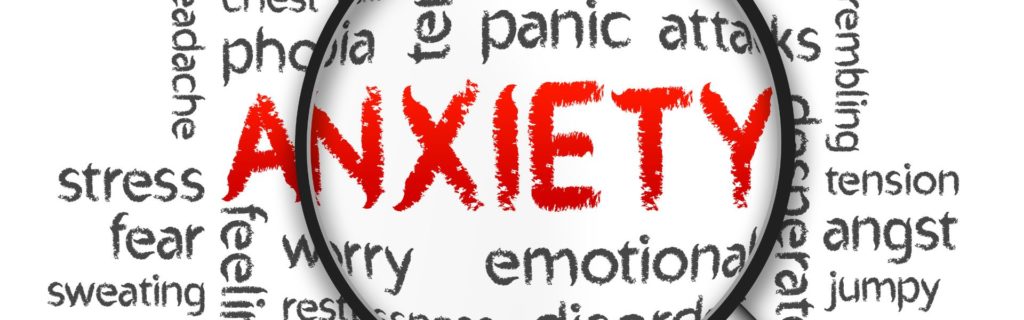
Since anxiety is a biological mechanism meant to protect us, it is not always considered an anxiety disorder. As mentioned previously, it becomes problematic if we experience suffering and have difficulty functioning. Here is a list of anxiety disorders:
- panic attacks
- obsessive-compulsive disorder
- social phobia
- generalized anxiety disorder
- specific phobia (simple phobia)
- post-traumatic stress disorder (fear following a traumatic event)
What are the causes of anxiety?
It may be tempting to wonder what makes one person experience anxiety while others are more light-hearted. The particularity of anxiety disorders is that they are always caused by multiple factors. As we often repeat at Familio, the issues are often complex and multifactorial.
Symptoms associated with anxiety disorders
Many physical symptoms can appear in people dealing with problematic anxiety.
- Heart palpitations
- High blood pressure
- Tremors
- Chest pains
- Feeling of being smothered
- Profuse sweating
- Nausea
- Dizziness
- Numbness or tingling
- Hot flashes or chills

What is important to remember is that it is useless to try to identify THE cause by ourselves and that it is entirely possible to get help to better live with an anxiety disorder.
At Familio, we offer the programs SAJE and AGIR, innovative approaches in mental health. If you do not know where to start this process and you believe you need help, do not hesitate to contact us.
Sources:
Julie Lebeau – Specialized educator at Familio
Related articles

The Impact of Remote Work on Mental Health: Warning Signs and Balance
Less morning traffic. No more coffee getting cold in the car. For many people, working from home was initially a relief: more relaxed mornings, time regained, and a schedule better suited to family life. Over time, however, something else can sometimes set in. The workday ends, the computer shuts down, and you’re still in the same place. Interactions have been limited to video calls and quick messages. A subtle form of isolation can then take hold.

Clinical Supervision in Mental Health: Learning, Growing, and Sharing
Clinical supervision can support mental health professionals at various stages of their careers: during training, in the early years of practice, when entering a new field of expertise, or simply when they wish to continue developing their professional practice.

Are you wondering if it's ADHD? When to seek help and what a neuropsychological evaluation is for
Are you wondering if it's ADHD? A neuropsychological evaluation goes beyond a diagnosis and sheds light on how your cognitive functions work in everyday life.