


Who can diagnose attention deficit disorder with or without hyperactivity (ADHD) in children?
Attention deficit disorder with or without hyperactivity (ADHD) is a topic that raises many questions among both parents and teachers. To properly support young people who are affected, it is essential to understand what this disorder is, its symptoms and, above all, who can make a reliable diagnosis. At Familio, we are here to help you navigate this complex process.
What is attention deficit disorder with or without hyperactivity?
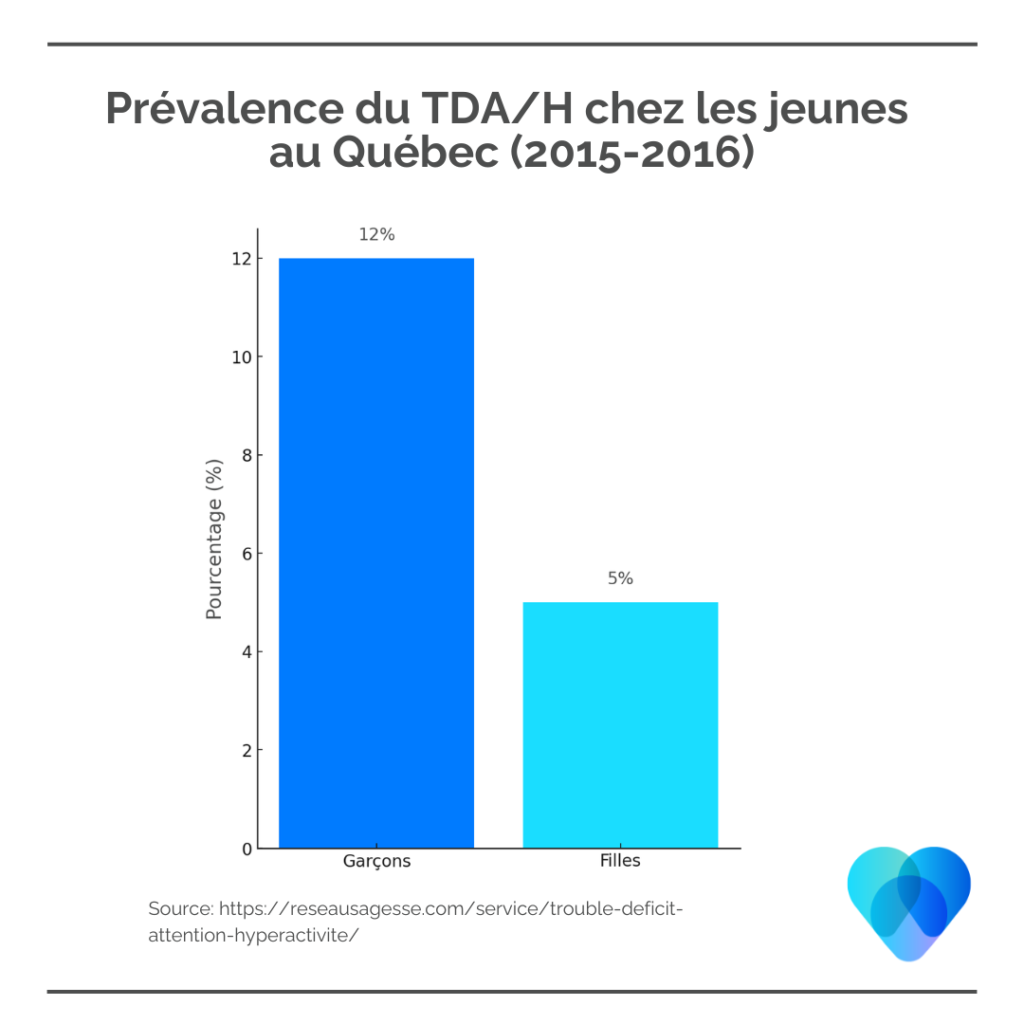
ADHD is a neurodevelopmental disorder that primarily affects children, although its symptoms often persist into adulthood. Unlike other conditions that develop over time, ADHD is part of a person’s life from childhood. Affected children generally have difficulty organizing their activities, controlling their behavior, or maintaining their attention. This disorder affects a significant proportion of young people in Quebec: in 2015–2016, about 11.3% of young people aged 1 to 24 were affected by ADHD. In addition, according to recent studies, the prevalence of ADHD appears to be a little more than twice as high in boys as in girls.
ADD or ADHD: What is the difference?
There are two forms of attention deficit disorder: with or without hyperactivity. ADHD includes behaviors of hyperactivity and impulsivity, visible in social and school interactions. ADD, on the other hand, is more discreet and mainly manifests as concentration problems, which can sometimes make it more difficult to diagnose.
ADHD symptoms in children: Inattention, hyperactivity, impulsivity
The symptoms of attention deficit disorder with or without hyperactivity (ADD/ADHD) vary from one child to another, but generally fall into three main categories: inattention, hyperactivity and impulsivity. In ADHD, hyperactivity is expressed by a constant need to move, fidget or talk excessively, while impulsivity leads the child to act without thinking, for example by interrupting others or disrupting games. These behaviors are often very visible, which makes them easier to detect.
In the case of ADD, which does not include hyperactivity, the child may seem calm or even dreamy, but has great difficulty maintaining attention on a task. They may forget instructions, have trouble following a conversation, or frequently lose objects. These symptoms can go unnoticed, but they affect school and family life just as much. It is therefore crucial to recognize these two forms of the disorder in order to implement appropriate interventions and help the child thrive fully.
What are the causes of ADHD?
The causes of ADHD are both genetic and neurological. About 75% of cases are hereditary. Abnormalities in certain areas of the brain, notably the frontal lobes, and lower levels of neurotransmitters such as dopamine are also involved. These factors directly influence attention capacities and behavior regulation.
Assessment or diagnosis: What is the difference?
Assessment of ADHD is a process that involves collecting information about your child’s behaviors and symptoms. This may include observations in the school environment, questionnaires completed by parents and teachers, as well as interviews with health professionals. This step is essential to understand the specific challenges your child faces.
The diagnosis, on the other hand, is the final conclusion established by a health professional, based on the results of the assessment. An early diagnosis is crucial because it allows for the implementation of appropriate interventions, such as educational strategies to improve learning, behavioral therapies to manage difficult behaviors, and sometimes medication to regulate symptoms. This ensures that your child receives the necessary support to thrive fully.
Who can make an ADHD diagnosis?
Do you suspect that your child may have one of these disorders? Do you want to confirm or rule out this hypothesis? Caution is required here.
Several professionals, such as educators, social workers, physiotherapists and many others, can play a significant role in detecting early signs and in helping families adapt to this new reality. Teachers are often the first to observe traits resembling ADHD and to raise the alarm.
Only physicians, neuropsychologists and psychologists have the authority to make an official ADHD diagnosis. However, other professionals, like teachers or educators, can play a key role in identifying early signs. A clear diagnosis is essential to put an effective intervention plan in place.
Why is it important to diagnose ADHD?
An ADHD diagnosis makes it possible to better understand the challenges a child faces and to adapt interventions to promote their academic and personal success. Without appropriate support, a child with ADHD may experience academic or relational difficulties that could be misinterpreted as a lack of motivation. Moreover, early management reduces the risk of long-term problems, such as low self-esteem, anxiety or depression.
Treatment of ADHD
Helping a child with ADHD requires an approach that is both structured and compassionate. Establishing clear routines and using practical tools, such as visual reminders, are essential to help them get organized. A calm environment, realistic expectations and emotional support are equally important. In addition, close collaboration between parents, teachers and health professionals ensures coherent care tailored to the child’s specific needs.
Familio: Comprehensive support for you and your child
As you may have noticed, ADD/ADHD is a complex disorder that requires sustained effort from the child and their support network. However, this does not mean the situation is insurmountable. At Familio, we are here to support you throughout this process. Through our interdisciplinary approach, we collaborate with neuropsychologists, psychologists, social workers and other mental health professionals to carry out accurate assessments for both children and adults.
We understand the importance of appropriate and consistent support to help your child overcome the challenges related to ADHD. If you have concerns about your child’s behavior or learning difficulties, please do not hesitate to contact us. Together, we will implement strategies that will promote their well-being and that of your family.
Sources
Quebec Association of Neuropsychologists (2024). Documentation on ADHD. AQNP. https://aqnp.ca/documentation/developpemental/tdah/
Clinique de Psychologie Québec (2024). ADHD in adults: This underestimated condition. Clinique de Psychologie Québec. https://cliniquepsychologiequebec.com/tdah-adulte/
Familio (2024, March 1). ADHD in adults: Understand and act. Familio. https://familio.ca/2024/03/tdah-chez-l-adulte/
National Institute of Public Health of Quebec (2018). Surveillance of attention deficit/hyperactivity disorder (ADHD). INSPQ. https://www.inspq.qc.ca/sites/default/files/publications/2535_surveillance_deficit_attention_hyperactivite.pdf
ADHD Institute (2024, March 15). ADHD: Information and resources. ADHD Institute. https://www.institutta.com/s-informer/tdah
Réseau Sagesse (n.d.). Services for attention deficit disorder with or without hyperactivity. Réseau Sagesse. https://reseausagesse.com/service/trouble-deficit-attention-hyperactivite/
Related articles

Preventing mental fatigue: take care of your health to avoid burnout
Between personal responsibilities, the workplace, unexpected events, and an often demanding pace of life, our brains are now under constant strain. Notifications, screens, multitasking, and the need for instant gratification sometimes leave little room to truly unwind or recharge. This reality is becoming increasingly prevalent. In 2023, more than 4.1 million Canadian workers reported experiencing high levels of work-related stress and daily overload.

Understanding grief: stages, emotions and the grieving process | Familio
When pain returns as time passes, it’s normal to wonder why. We hear about the stages of grief, as if simply going through them one by one would make things better. As if there were a "right way" to grieve. Yet grief does not follow a straight line. It can come back in waves, take different forms, and be experienced very differently from one person to another. Understanding what is happening can help put words to what we feel, recognize returning emotions, and know when to seek support.
Caregivers: the often invisible pillars of our society
Supporting a loved one experiencing loss of autonomy, caring for an ill spouse, or being present for a child with particular challenges — for many caregivers, these situations are simply part of daily life. Learn about caregivers, the impact on their mental health, and how to better support them.