


Recognizing signs of violence in young and old
Who has never been a victim of violence? Sometimes insidious, sometimes more direct, it manifests in many forms and in an infinite variety of contexts. It affects individuals of all ages, sexes and backgrounds.
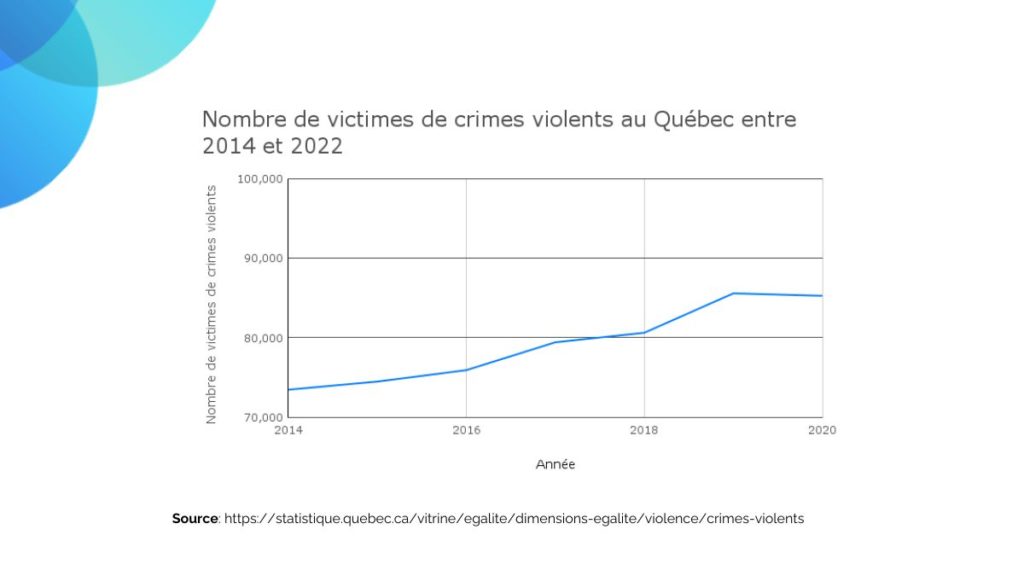
In Quebec alone, between 2014 and 2022, the number of victims of violent crimes jumped by 36.74% and its victims are increasingly younger. Indeed, according to a 2018 study by the Institut de la statistique du Québec, more than half of children under 17 had suffered at least one type of violence in the previous 12 months. And these figures are only getting worse.
But what are the real effects of violence? How can we recognize potential manifestations of violence, especially among young people? And what to do if I think my teenager or someone in my circle is a victim of violence?
What is violence?
Violence can manifest in multiple forms and in various contexts. It affects individuals of all ages, sexes and backgrounds. For the purposes of this article, we will define it as an interaction between two or more people where acts (words, writings, gestures, whether obvious or subtle) are intentionally directed against another, potentially leading to harmful consequences such as anxiety, loss of material possessions, trauma, or other damage (https://www.quebec.ca/famille-et-soutien-aux-personnes/violences/violences#c61970).
This definition encompasses a wide range of actions that span from physical assault to psychological violence. And every violent act, even the smallest, can have significant effects.
The effects of violence
Violence has many effects and consequences. For the victim, physical impacts can manifest as headaches, stomach cramps, fractures, and sprains. Anxiety and insomnia are also frequent effects, reflecting the deep psychological impact of these experiences.
The repercussions on mental health are just as alarming. Loss of self-confidence, anguish and fear become constant companions. Victims may feel incompetent and ashamed, which can lead to suicidal thoughts.
Social isolation is also a frequent symptom among affected people, and especially among young people, who may withdraw from their usual social activities. This worsens their situation by depriving them of peer and community support.
Sometimes, young people change their behavior significantly. They may become more aggressive or use medication or drugs to cope with their pain. They may also display hyperactivity or, conversely, complete withdrawal, indicating their struggle to manage stress and anxiety.
Types of violence
Understanding the forms of violence is essential to identifying the signs and preventing it among both young and older people. There are different types of violence that affect people in different ways. Each type has its own manifestations and consequences. Recognizing these different types is crucial to intervene effectively and provide the necessary support to victims.
Physical violence
Physical violence is one of the most visible manifestations. It encompasses actions ranging from a simple punch on a table to extremely serious acts like homicide. It can target people, groups, objects, animals, or even places, making its impact particularly wide-reaching and dangerous.
Regularly trivialized in sports, films, on the web or in video games, its impacts are no less real. In fact, in 2022 alone, the rate of violent crimes involving firearms jumped by 9% in Canada (https://ici.radio-canada.ca/nouvelle/2045622/taux-crimes-violents-armes-feu-augmentation-canada-2022).
Verbal violence
Verbal violence is used to intimidate, humiliate or control a person or a group. It can take different forms, such as insults, threats, shouting, blame, criticism, harassment and taunts. It includes the use of sarcasm, direct insults, degrading or humiliating remarks and more.
Psychological violence
Psychological violence is a form of violence whose manifestations are often minimized. Used to control or dominate a person, this form of violence is very subtle and insidious. It involves actions such as constant criticism, distortion of reality to alter someone's perception, and manipulation of emotions.
It can be difficult to detect, because it is often disguised by behaviors that may seem harmless or justified in certain cultures. Moreover, it can appear in diverse and private contexts and places, such as within a romantic relationship, an employer-employee relationship, or a parent-child relationship.
Sexual violence
Sexual violence represents one of the most serious and intimate forms of violence. Victims of sexual violence are of diverse sexes and genders. Acts of sexual violence include any action, gesture or words related to sexuality that are imposed without consent, even if they occur within the context of a marital relationship. It often involves people known to the victim, such as a friend or a romantic partner.
The manifestations of this type of violence are varied. These can range from threats to obtain sexual favors to unwanted touching, but also include sexual harassment, sextortion as well as the sending and sharing of intimate photos without consent.
Despite the severity of these acts, sexual violence often remains underreported, due to the victim's knowledge of the aggressor, feelings of guilt, or fear of the justice system.
Economic violence
Economic violence is characterized by behaviors that restrict access to financial autonomy. Like physical or psychological violence, it can be exercised openly or more subtly.
It often includes control of the victim's income, such as forbidding someone to work or seizing their earnings. It can also involve severe restrictions on the family budget, not sharing resources equitably or refusing to finance essential needs.
Forms of violence can vary in intensity and method, but they all share a common objective: to limit freedom and strengthen the victim's dependence on the aggressor. In cases of economic violence, this dependence creates a situation where the victim is trapped, unable to make independent decisions or leave an abusive situation due to lack of financial resources. Identifying and understanding this form of violence is crucial to effectively support victims and offer them the means to regain their independence.
Social violence
Social violence manifests as the isolation of the victim from their loved ones and social network. This type of control is often exercised by a partner who limits the victim's interactions with others. This strategy aims to keep the victim under control by limiting their options for support and escape from abuse.
Signs of social violence include monitoring the victim's movements, being excessively jealous and monitoring their personal communications. Constantly criticizing the victim's friends and family and spying on their phone or electronic conversations are common practices in these cases of violence.
Spiritual / religious violence
Spiritual or religious violence is a form of violence that occurs when someone's freedom to express their religious beliefs or to attend a place of worship is hindered. This type of violence is characterized by criticism and invalidation of others' convictions, traditions, and cultures, often justified by religious concepts to control or manipulate.
Aggressive behaviors in this context can include the use of religious beliefs to justify violence in their relationships or to dominate others. This form of violence is often masked under pretexts of piety or religious fidelity, which can make its signs difficult to identify.
These forms of violence are often underestimated, but can have profound impacts on victims' mental health and well-being, depriving them of their freedom of belief and altering their relationship with their own spirituality.
Identity-based violence
Identity-based violence, also called cultural violence, targets individuals' personal characteristics to demean, manipulate and control. This form of violence encompasses racism, sexism, classism, ageism, ableism, homophobia, biphobia and transphobia. The violent behaviors associated with these oppressions can overlap with other forms of abuse, making the situation more complex and more difficult for victims.
Early studies on identity-based violence reveal that victims are often isolated from their peers and suffer long-term consequences such as anxiety, depression, and low self-esteem. In addition to suffering psychological abuse, these individuals can also become victims of physical violence. Identifying and addressing these behaviors is essential to provide the necessary support to victims and to work towards a more just and inclusive society.
Cyberviolence
Cyberviolence is an insidious form of digital abuse that is increasingly widespread. It manifests through behaviors such as cyberbullying, which includes threats, insults, spreading malicious rumors, sextortion or identity theft. These acts are often facilitated by the anonymity of the Internet, which allows aggressors to hide their real identity or impersonate someone else.
Examples of cyberviolence are varied: a teenager may receive threatening messages on their phone, see embarrassing rumors about their private life spread on social networks, or be deliberately excluded from online groups to isolate them from their social circle. Other forms include "flaming", where incendiary messages are sent to publicly humiliate, or "happy slapping", which involves recording assaults on a person and then sharing the video online. These actions have devastating impacts on young people's mental health, leading to anxiety, depression, and sometimes even more tragic outcomes.
Recognizing cyberviolence in young people's relationships is essential to intervene effectively. According to a study commissioned by McAfee in 2022, 57% of Quebecers aged 10 to 18 have already experienced cyberbullying and yet, only 22% of them sought help (https://www.lapresse.ca/actualites/2022-09-03/57-des-jeunes-quebecois-ont-deja-subi-de-la-cyberintimidation.php).
Young victims of online violence must be supported and understand that legal remedies exist to protect them. Parents and educators must be vigilant and ready to act to stop these abuses, by encouraging young people to speak up and by monitoring their online activity.
Coercive control
Coercive control encompasses various tactics used to isolate, degrade, and dominate a person, thus reducing their freedom. This type of violence can manifest in different contexts, including but not limited to intimate partner violence. It includes methods that go beyond physical violence, involving deep psychological manipulation acts that keep victims under strict control, even in the absence of the aggressor, creating a constant climate of fear.
Strategies of coercive control include acts of intimidation such as threats of suicide or separation, daily harassment through excessive monitoring of activities and communications, as well as public humiliation. Isolation of the victim is frequently used, preventing access to family or friends, and material deprivations, such as limited access to financial or medical resources, are also common.
Violence in romantic relationships among young people
A word on violence in romantic relationships among adolescents: violence in adolescent romantic relationships is a serious public health problem because of its impacts on mental, physical and sexual health. Indeed, more than a third of students in grades 9, 10 and 11 would be victims (Riberdy, H., and Tourigny, M. (2009). Violence et fréquentations amoureuses au secondaire: coup d’œil à Montréal. Enquête sur le bien-être des jeunes Montréalais, Rapport thématique 3. Montréal, Québec : Agence de la santé et des services sociaux de Montréal, Direction de la santé et des services sociaux de Montréal.)
Young people who suffered trauma during childhood or who witnessed intimate partner violence are particularly vulnerable to this violence in their romantic relationships.
Violence in adolescent romantic relationships can include sexually coercive assaults and is exacerbated by exposure to intimate partner violence. This developmental period is crucial because adolescents experience their first romantic relationships, which play a key role in the formation of their identity and their emotional and sexual development.
Unlike in adulthood, violence among adolescents can be characterized by short and successive relationships. This, combined with their lack of experience, makes some young people unable to recognize the violence or to seek appropriate help. Contrary to popular belief, violence in adolescent romantic relationships is not without consequence and can seriously affect the young person's development and influence their future romantic relationships. Again, if you believe that a young person or someone in your circle is a victim of intimate partner violence, do not stand idly by: act.
How to recognize possible manifestations of violence?
Knowing the potential signs of abuse is crucial in order to reduce risks within your community and avoid negative consequences on the lives of young and older people. If you are concerned about a situation, do not hesitate to talk with the person concerned to understand what they are experiencing. It is important to validate their experiences, to assure them that the abuse is never their fault and not to jump to conclusions or pass judgment on the people involved. Remember that the presence of a sign of abuse does not necessarily confirm its existence. However, if you notice signs of abuse, or if a young person confides in you that they are a victim and you fear for their safety, it is your duty to report the situation.
In any case, here are some non-exhaustive signs indicating potential manifestations of violence, among others in a young person:
- Withdraws into themselves, isolates, and refuses to participate in activities they previously enjoyed
- Seems uncomfortable and expresses that they do not want to be alone with an adult
- Displays emotional reactions that do not correspond to their age or stage of development.
- Expresses regret and makes excuses for the behavior
- violent
- Adopts suddenly regressive behaviors
- Regularly suffers from headaches, nausea, stomach pains, urinary accidents without a determined physical cause
- Shows behaviors of passivity, aggressiveness, excessive attention-seeking, withdrawal or alternation between docility and defiance.
- Suffers injuries whose origin they do not remember or gives explanations that are not coherent.
- Startles at physical contact or sudden movements
- Shows sexual knowledge or behaviors unusual for their age
- Makes reference to / incorporates sexual references during play
- Suddenly refuses to change for gym class or to participate in physical activities in general
- Scratches themselves excessively or has difficulty walking or staying seated due to pain in the genital or anal region.
Although not exhaustive, this list of manifestations includes signs that should not be taken lightly. Remember that if you notice signs of abuse or violence, have doubts, or a young person or any other person reports to you that he or she is a victim of abuse, it is your duty to act.
What can I do if I think a young person in my circle is a victim of violence?
If a child or adolescent confides in you, listen to them calmly and without judgment. Make sure the child or adolescent is safe, and offer them your support without blaming anyone or passing judgment.
Do you think a young person may be a victim of violence? Choose an appropriate time and place to have a private conversation with them, and listen openly. If your personal observations, or the child's statements and confidences, give you valid reasons to believe that their safety or development is or may be in danger, you must immediately report the situation to the Director of Youth Protection (DPJ), in accordance with the requirements of the Youth Protection Act (LPJ).
What can I do if I think I am a victim of violence?
If you are experiencing or believe you are experiencing harassment, discrimination or violent behaviors, act quickly to put an end to these unacceptable behaviors and prevent any worsening of the situation.
Not sure if what you are experiencing is violence? Various online tools can help you determine if you are a victim of violence, such as the interactive tests from SOS Violence Conjugale (https://sosviolenceconjugale.ca/fr/explorer-votre-situation) or Ouvrez les yeux (https://ouvrelesyeux.ca/quiz/).
Do not isolate yourself. You can discuss the situation with a trusted person, whether a friend, a colleague or a family member. Keep all evidence and carefully note details such as the date, time, place, the name of the aggressor, the names of witnesses, and the precise nature of the acts committed.
Do not hesitate to seek help. Your emotions are valid, and you do not have to blame yourself for the behaviors you are subjected to. You can contact a mental health and social services expert at Familio who can help you through the situation you are experiencing. You will also find below a list of useful resources that could help you.
If you think your life or that of a loved one is in danger, do not hesitate to contact emergency services at 9-1-1.
List of useful resources
Ecoute Entraide
1-855-365-4463
https://www.ecoute-entraide.org/ligne-decoute/
Tel-Aide Montreal
514-935-1101
https://telaidemontreal.org/
Telephone listening center of the Canadian Mental Health Association, Quebec branch
418-529-1899
For young people
Aidez-moi SVP
For young victims of cyber violence, sextortion or who want to block the spread of a photo, a sext or a video on the internet.
https://www.aidezmoisvp.ca/fr/
Jeunesse J’écoute
https://jeunessejecoute.ca/
Tel Jeunes
By phone (6am-2am): 1-800-263-2266
By text (8am-10:30pm): 514-600-1002
Or by chat: https://jeunessejecoute.ca/
Related to sexual and intimate partner violence
SOS Violence Conjugale
Helpline (24/7): 1-800-363-9010
https://sosviolenceconjugale.ca/
Info-Aide Sexual Violence
1-888-933-9007
https://infoaideviolencesexuelle.ca/
The Quebec Network of Help and Action Centers against Sexual Assault (RQCALACS)
1-877-717-5252
https://rqcalacs.qc.ca/
Rebâtir: Free legal consultation for people who are victims of sexual violence and intimate partner violence
1-833-REBATIR
https://rebatir.ca/
Network of shelters for women victims of intimate partner violence
https://maisons-femmes.qc.ca/maisons-membres/
Violence Info
418-667-3232
Other resources
Action on Violence and Family Intervention
450-692-7313
https://avif.ca/
Assistance Centre for Victims of Criminal Acts
1-866-532-2822
https://cavac.qc.ca/
Elder Abuse Help Line
1-888-489-2287
https://lignemaltraitance.ca/fr
Option – An alternative to intimate partner and family violence
For people who are violent in a conjugal and family context and who want to change
514-527-1657
https://www.optionalternative.org/
Sources
ACCROC Québec. (n.d.). Home. Retrieved from https://accroc.qc.ca/
United Nations General Assembly. (1993, December 20). Declaration on the Elimination of Violence against Women. Resolution 48/104 of the General Assembly. Retrieved from www1.umn.edu/humanrts/instree/french/Fe4devw.htm
Council of Europe. (n.d.). Types of gender-based violence. Retrieved from https://www.coe.int/fr/web/gender-matters/types-of-gender-based-violence
De Connivence. (n.d.). Tests: Am I experiencing intimate partner violence? Retrieved from https://deconnivence.ca/tests/est-ce-que-je-vis-de-la-violence-conjugale
Étincelles UQAM. (n.d.). Trusted adults: Violence in relationships. Retrieved from https://etincelles.uqam.ca/adultes-de-confiance/la-violence-dans-les-relations/
Fondation Maison de la famille Hochelaga-Maisonneuve. (n.d.). Different forms of violence. Retrieved from https://fmhf.ca/definitions/differentes-formes-de-violence/
Government of Quebec. (1995). Intervention policy on intimate partner violence: Prevent, detect, counter. Quebec: Government of Quebec.
Government of Quebec. (n.d.). Violence. Retrieved from https://www.quebec.ca/famille-et-soutien-aux-personnes/violences/violences#c61970
Heise, L. & Garcia-Moreno, C. (2002). Violence by intimate partners. In E.G. Krug, L.L. Dahlberg, J.A. Mercy, A. Zwi and R. Lozano-Ascencio (Eds.), World report on violence and health (pp. 97-135). Geneva: World Health Organization.
National Institute of Scientific Research (INRS). (2024). I am a victim of harassment or I believe I am. Retrieved from: https://inrs.ca/harcelement-psychologique-et-violences-a-caractere-sexuel/je-suis-harcele-ou-je-crois-letre/
National Institute of Public Health of Quebec. (n.d.). Understanding contexts of vulnerability in adolescence. Retrieved from https://www.inspq.qc.ca/violence-conjugale/comprendre/contextes-de-vulnerabilite/adolescence
National Institute of Public Health of Quebec. (n.d.). Understanding the risk factors of intimate partner violence. Retrieved from
https://www.inspq.qc.ca/violence-conjugale/comprendre/facteurs-de-risqueIci Radio-Canada (January 30, 2024). The rate of violent crimes involving firearms jumped by 9% in 2022 in Canada. Retrieved from https://ici.radio-canada.ca/nouvelle/2045622/taux-crimes-violents-armes-feu-augmentation-canada-2022
Jeunesse J’écoute. (n.d.). Identifying signs of abuse in young people. Retrieved from https://jeunessejecoute.ca/information/identifier-les-signes-dabus-chez-les-jeunes/
La Presse. (September 3, 2022). 57% of Quebec youth have already experienced cyberbullying. Retrieved from: https://www.lapresse.ca/actualites/2022-09-03/57-des-jeunes-quebecois-ont-deja-subi-de-la-cyberintimidation.php
La Débrouille. (n.d.). The different types of intimate partner violence. Retrieved from https://www.ladebrouille.ca/violence-conjugale/les-differents-types-de-violence
Workplaces allied against intimate partner violence. (2024). Retrieved from: https://milieuxdetravailallies.com/quest-ce-que-le-controle-coercitif%E2%80%89/
UN Women. (n.d.). Facts and figures: Ending violence against women. Retrieved from https://www.unwomen.org/fr/what-we-do/ending-violence-against-women/facts-and-figures
Ouvre les yeux. (2024). Quiz. Retrieved from: https://ouvrelesyeux.ca/quiz/
Riberdy, H., and Tourigny, M. (2009). Violence and romantic dating in high school: a glance at Montreal. Survey on the well-being of Montreal youth, Thematic Report 3. Montreal, Quebec: Montreal Agency for Health and Social Services, Directorate of Health and Social Services of Montreal.
Public Safety Canada. (n.d.). Aggression in adolescent dating relationships. Retrieved from https://www.securitepublique.gc.ca/cnt/rsrcs/pblctns/fml-adlscnt-aggrssn/index-fr.aspx
SOS Violence Conjugale. (n.d.). Explore your situation. Retrieved from https://sosviolenceconjugale.ca/fr/explorer-votre-situation
World Health Organization & London School of Hygiene and Tropical Medicine. (2010). Preventing intimate partner and sexual violence against women: Taking action and generating evidence. Geneva: World Health Organization.
Related articles
Preventing mental fatigue: take care of your health to avoid burnout
Between personal responsibilities, the workplace, unexpected events, and an often demanding pace of life, our brains are now under constant strain. Notifications, screens, multitasking, and the need for instant gratification sometimes leave little room to truly unwind or recharge. This reality is becoming increasingly prevalent. In 2023, more than 4.1 million Canadian workers reported experiencing high levels of work-related stress and daily overload.

Understanding grief: stages, emotions and the grieving process | Familio
When pain returns as time passes, it’s normal to wonder why. We hear about the stages of grief, as if simply going through them one by one would make things better. As if there were a "right way" to grieve. Yet grief does not follow a straight line. It can come back in waves, take different forms, and be experienced very differently from one person to another. Understanding what is happening can help put words to what we feel, recognize returning emotions, and know when to seek support.
Caregivers: the often invisible pillars of our society
Supporting a loved one experiencing loss of autonomy, caring for an ill spouse, or being present for a child with particular challenges — for many caregivers, these situations are simply part of daily life. Learn about caregivers, the impact on their mental health, and how to better support them.