


How to obtain a school waiver
If your child is 4 years old, you probably have an important event in mind that will take place soon: the transition from daycare to elementary school. In this regard, the Education Act provides an age-based eligibility deadline for elementary school: September 30. Some children who will not have reached the required age by that date may, however, show signs of early development.
If this is the case for your child, you may be considering early school entry for them. To apply for it, you will need to obtain a school exemption.
What is a school exemption request?
A school exemption request is an exceptional measure granted to a child to begin elementary school before reaching the required age. It can concern preschool or the first grade.
In Quebec, a child must have reached the age of 5 by September 30 at the latest to be eligible for kindergarten. However, it sometimes happens that, to support a child's development, an early admission request (school exemption) is made. Any exemption request must be supported by a recognized evaluation.
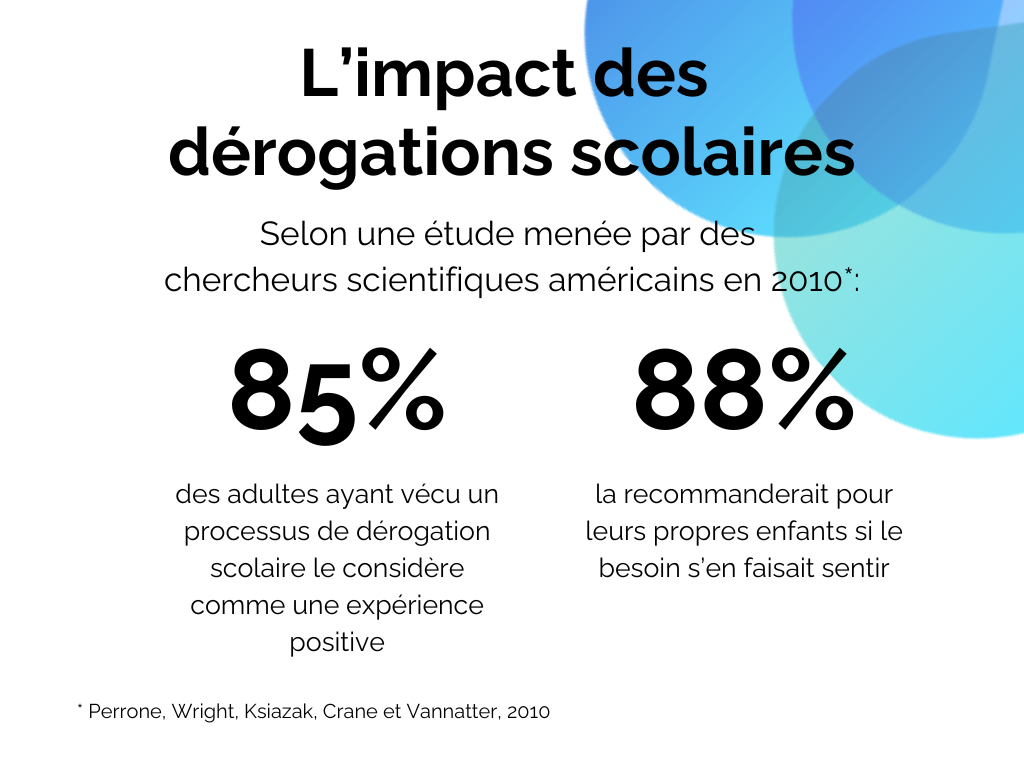
Several scientific studiesdemonstrate the positive impact of early schooling on children's school trajectories and their overall development. The school exemption is therefore an important tool for the parents and children concerned.
What are the criteria justifying eligibility for an exemption?
An exemption to the age of admission to school is an exceptional measure. It can be granted for humanitarian reasons or to avoid serious harm to the child's development. To be accepted, the child must demonstrate that they stand out significantly in all areas of their development:
– Intellectual
– Linguistic
– Social
– Emotional
– Psychomotor
To this end, an evaluation of the child must be carried out by a qualified psychologist or neuropsychologist who is a member of the'Order of Psychologists of Quebec (OPQ).
How is the assessment of the level of development carried out and what are the next steps?
Different questionnaires must first be completed by the parents and the child's daycare. Afterwards, the assessment meeting itself takes place in person.
Then, the child attends the meeting with their parents. First there is an interview portion with the parents to learn more about the child's development. Afterwards, the assessment meeting itself begins with the child. It takes place in person, since the activities are in the form of games and the standardized psychometric tests require specific materials.
These tests generally take place over two sessions. After analyzing the results obtained, the professional will pronounce on the child's eligibility or not for the school exemption. If the results objectively demonstrate that the child would benefit from this exceptional measure, the professional writes a letter attesting to this recommendation. It is then given to the parents so they can support their request with their neighbourhood school.
The child's file is forwarded and analyzed by the Service Centre, then the final decision is communicated to the parents and to the administration of the school concerned. In case of refusal, parents have the option of appealing to their School Service Centre.
If you have a 4- or 5-year-old child and think they could benefit from the school exemption, contact us. One of our professionals will help you navigate this process with ease.
Related articles

Preventing mental fatigue: take care of your health to avoid burnout
Between personal responsibilities, the workplace, unexpected events, and an often demanding pace of life, our brains are now under constant strain. Notifications, screens, multitasking, and the need for instant gratification sometimes leave little room to truly unwind or recharge. This reality is becoming increasingly prevalent. In 2023, more than 4.1 million Canadian workers reported experiencing high levels of work-related stress and daily overload.

Understanding grief: stages, emotions and the grieving process | Familio
When pain returns as time passes, it’s normal to wonder why. We hear about the stages of grief, as if simply going through them one by one would make things better. As if there were a "right way" to grieve. Yet grief does not follow a straight line. It can come back in waves, take different forms, and be experienced very differently from one person to another. Understanding what is happening can help put words to what we feel, recognize returning emotions, and know when to seek support.
Caregivers: the often invisible pillars of our society
Supporting a loved one experiencing loss of autonomy, caring for an ill spouse, or being present for a child with particular challenges — for many caregivers, these situations are simply part of daily life. Learn about caregivers, the impact on their mental health, and how to better support them.