

Living with the fear of being afraid: when anxiety takes over everyday life
As the streets are adorned with pumpkins and we have fun playing with our fears and creating shivers, there are other fears, very real ones, that do not disappear once the lights are turned back on. Living with the fear of being afraid is often that: a constant worry, a persistent inner tension that settles in without us realizing it, sometimes related to apanic disorder or other anxiety disorders.
Anxiety, in all its forms, is part of life. It can protect us, warn us, push us to act — but sometimes that anxiety takes over. It shows up in our relationships, our decisions, our sleepless nights, sometimes accompanied by physical symptoms like headaches, chest pain, palpitations, tremors or sweating. The fear of not being good enough, economic uncertainties, eco-anxiety, or parental worries: so many faces of the same anxious emotion trying to tell us something.
What if, instead of running from our fears, we learned to listen to them differently?
When anxiety saved our lives: understanding the origin of anxiety disorders
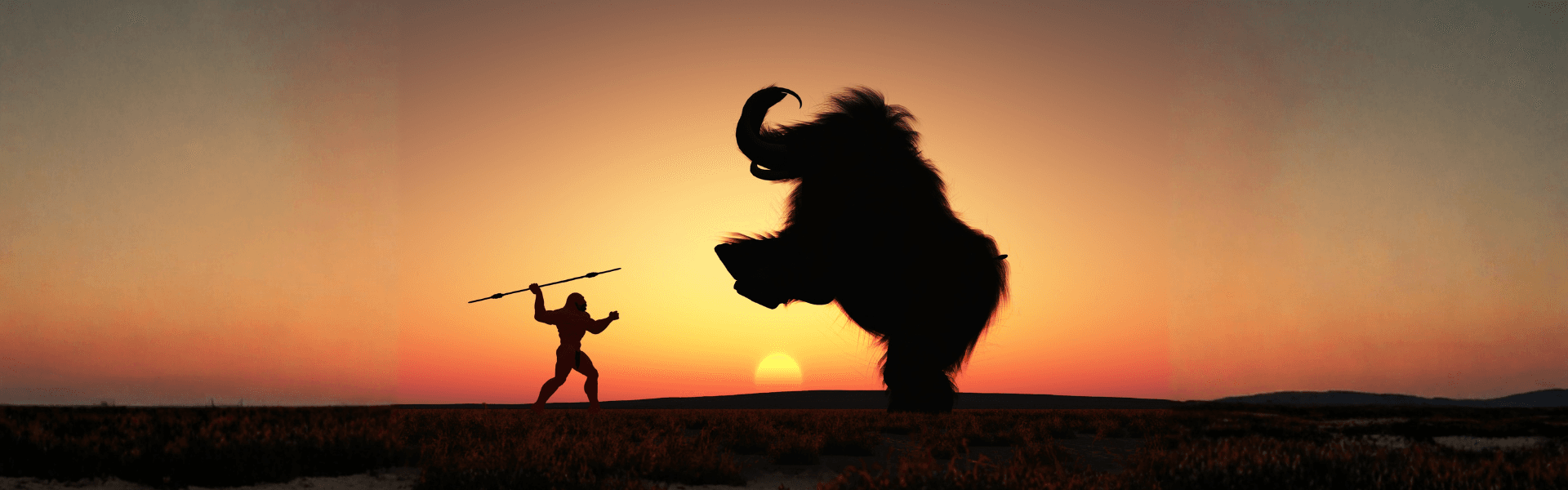
Anxiety has been part of us forever. In Cro-Magnon times, it served to survive. While some went off to hunt mammoths, others, more cautious, anticipated dangers, watched around the fire and prepared strategies to avoid the worst. In other words, the more cautious, more anxious among them — those who anticipated danger — were essential to the group's survival. Their vigilance protected the group.
Anxiety, useful back then, has remained embedded in our brain. Today, it is no longer triggered by mammoths, but by deadlines, notifications, family or financial responsibilities — stressful situations our brain associates with danger. What was once a survival mechanism has become, for many, a source of exhaustion.
And when that anxiety becomes too strong or recurrent, it can turn into generalized anxiety disorder, a phobia, or panic disorder. In these cases, signs and symptoms intensify: the body races, thoughts become repetitive, nervousness sets in, and the mind can no longer tell the difference between real danger and false alarms.
The fear of being afraid: the subtle forms of anxiety in daily life
Anxiety is often talked about as a mental health disorder, medically recognized. But for many people, anxiety settles in without a diagnosis, almost silently. According to data from the Ministère de la Santé et des Services Sociaux du Québec, about 21.5% of people aged 12 and over experience intense stress or significant anxiety symptoms daily — without having received a formal diagnosis of an anxiety disorder. In other words, nearly a quarter of Quebecers live with anxiety that concretely influences their well-being, decisions and relationships. (https://www.msss.gouv.qc.ca/professionnels/statistiques-donnees-sante-bien-etre/statistiques-de-sante-et-de-bien-etre-selon-le-sexe-volet-national/stress-percu-dans-la-vie/) (https://statistique.quebec.ca/vitrine/egalite/dimensions-egalite/sante/troubles-anxiete?onglet=ensemble-de-la-population)
For many, these forms of anxiety take very concrete shapes: the fear of not being good enough, financial or professional worries, eco-anxiety about the planet's future, or parental fears. Others live with existential anxieties, hard to name but very real. So many faces of the same anxious emotion that settles into daily life and colors the way we move forward, love and hope.
The fear of not being good enough
This is perhaps one of the most common forms of anxiety. It slips into our thoughts when we doubt our abilities, our worth or our capacity to meet expectations — those of others, but especially our own. This anxiety can be irrational: we want to do everything perfectly, fear failure, and lose ourselves trying to prove we're "enough." Sometimes it leads to avoidance, postponing projects or isolating oneself, out of an intense fear of not succeeding perfectly.
Relationship anxieties
They sometimes hide behind the fear of being judged, rejected or abandoned. Other times, they show up as a desire to control everything, to please at all costs, or to anticipate others' needs before they express them. These anxiety issues often have roots in attachment, past experiences, or a deep need for emotional security.
Living with this anxiety is often like walking a tightrope: wanting closeness without exposing oneself too much, loving while fearing losing the other. And the more anxiety settles in, the more it can affect the quality of relationships, creating the opposite of what it seeks — distance, misunderstanding or silence.
Social and economic worries
If our ancestors feared cold or predators, our fears today have shifted to other threats: financial instability, job performance, the cost of living or the future of society. In a stressful world where comparisons are constant, it becomes hard not to feel anxious.
These worries feed a generalized anxiety characterized by a diffuse tension. We wake up at night thinking about our bills, fearing the loss of what we've built. Gradually, it wears down the body and mind, intensifying anxiety symptoms and making it difficult to enjoy the present.
Eco-anxiety
Images of natural disasters, heat waves and wildfires awaken in many an intense anxiety: fear for the future and a sense of powerlessness. Eco-anxiety stems from this feeling of being overwhelmed. It affects both young people and anxious parents worried about their future. This anxiety can be healthy when it leads to action, but when disproportionate to the actual danger, it becomes traumatic and persistent.
Parental fears
Being a parent is to love so strongly that one sometimes forgets to breathe. Behind this immense love often hide anxiety disorders: fear that our children won't succeed, that they'll be rejected, that they'll suffer. In an era where performance is omnipresent, these worries take up even more space.
This form of anxiety can lead to perfectionism or hypervigilance. We want to anticipate everything, control everything. But this anxiety can also deprive us of the pleasure of simply being together. In affected individuals, one sometimes observes symptoms of constant tension or increased irritability.
Existential anxieties
Sometimes anxiety has no precise name. It doesn't come from a concrete situation or a particular event, but from a deep questioning about life: the fear of aging, of losing loved ones, of not giving enough meaning to what we do. These existential anxieties often emerge during moments of transition or following a life event that can be traumatic — a loss, a career change, children leaving home, a global crisis — or simply when the pace slows and the silence brings us back to ourselves.
These thoughts can be disorienting, even frightening. But they are part of the human condition: they remind us that we all seek to understand, to exist, to leave a mark. However, they can imprison us in reflection to the point of forgetting to fully live what is already there.
When fear becomes a driver… or a prison
Anxiety is part of life. It keeps us alert, pushes us to anticipate and prepare. But sometimes it takes up too much space. It intensifies, settles in, and turns every situation into a source of tension. What was once just a worry then becomes a true anxiety disorder: thoughts spin in circles, the body exhausts, and emotions take over reason.
When anxiety goes beyond simple worry, it can hinder daily life: avoiding certain activities, postponing important decisions, isolating oneself for fear of losing control. Recognizing these signs is already a way to act. It's understanding that anxiety is not a weakness, but a signal that calls for listening and support.
Learning to decode this signal also opens the door to approaches that make it possible to regain control — whether psychotherapy, art therapy, neuropsychology or emotional regulation strategies. Because between vigilance and overadaptation, there is a space of balance where the mind can finally breathe.
The difference between anxiety and anxiety disorders
Everyone experiences anxiety: before an exam, an interview, an important decision… It's a normal, even useful reaction that prepares us to face a stressful situation. But when this anxiety becomes constant, disproportionate or interferes with daily life, it is then called an anxiety disorder.
Telling the difference between normal anxiety and an anxiety disorder allows for earlier action, before fear takes over. And when it settles in, it's not a lack of will — but a signal that it's time to seek support.
Finding balance in the face of fear and anxiety disorders
Finding balance doesn't mean making fear disappear. It's learning to live with it, to recognize it when it arrives, to give it the proper place it deserves — that of an emotion, not a driving force.
Soothing anxiety disorders starts by giving yourself permission to be imperfect, vulnerable, human. It's also accepting that you don't have to control everything to get better. Sometimes it begins with small acts: slowing down, breathing, saying no, asking for help, or simply giving yourself the right to exist without performance.
At Familio, several professionals can accompany this journey:
- the psychologists and psychotherapists, who help understand thoughts and emotions;
- the neuropsychologists, who assess whether other factors (such as an ADHD, a learning disorder or a giftedness) amplify anxiety;
- the occupational therapists, who support sensory regulation and the return to a balanced daily life;
- art therapists, who use creativity to express and transform fears;
- the sexologists, who support people experiencing anxiety related to intimacy, body image or to the relationship with oneself and others and more.
- the social workers, who help better cope with difficult life situations, strengthen support networks and find concrete solutions to personal, family or social ;
- the psychoeducators, who support the development of coping skills and emotional regulation, promoting concrete strategies to cope with daily anxiety.
Each path is unique, but all share the same goal: to regain a little more calm, freedom and presence with oneself. Because beyond fears and anxiety disorders, there is always an inner space where serenity can return — gently, but surely.
Need support?
Do you feel that fear or anxiety is taking up too much space in your daily life? At Familio, our professionals are here to help you understand what you are experiencing and regain your balance, at your own pace. Make an appointment today to begin your path toward more calm and clarity.
By
Kym Lefebvre Gamache
Sources
Familio. Interdisciplinary mental health services for children, adolescents, adults and families in Quebec.
https://www.familio.ca/
Quebec Institute of Statistics. Data on anxiety disorders in the Quebec population.
https://statistique.quebec.ca/vitrine/egalite/dimensions-egalite/sante/troubles-anxiete?onglet=ensemble-de-la-population
Ministry of Health and Social Services. Statistics on perceived stress in life among Quebecers.
https://www.msss.gouv.qc.ca/professionnels/statistiques-donnees-sante-bien-etre/statistiques-de-sante-et-de-bien-etre-selon-le-sexe-volet-national/stress-percu-dans-la-vie/
Resources
Anxiety Canada. Bilingual educational site with CBT-based tools to understand and manage anxiety (guides, exercises, videos, mobile app).
https://www.anxietycanada.com/fr/
Anxiety Canada – GAD-7 Questionnaire. Validated self-assessment tool to screen for generalized anxiety, available free online.
https://www.anxietycanada.com/fr/outils/questionnaire-gad-7/
Canadian Mental Health Association – Quebec. Community organization that offers information on mental health and regional support resources.
https://quebec.acsm.ca/
CIUSSS MCQ – Stress and Anxiety Toolbox. Downloadable resources to better understand, prevent and manage anxiety symptoms on a daily basis.
https://ciusssmcq.ca/sante-mentale/boite-a-outils-stress-et-anxiete/
Écoute Entraide. Empathetic, non-judgmental listening line offered by trained volunteers for people experiencing emotional or relational difficulties.
https://www.ecoute-entraide.org/
Groupe d'entraide G.E.M.E. Support organization for people experiencing anxiety or stress, with weekly groups and support services.
https://groupegeme.com/
Info-Social 811. Free psychosocial support service offered 24/7 by the Government of Quebec. Allows you to speak with a professional by dialing 811, option 2.
https://www.quebec.ca/sante/trouver-une-ressource/info-social-811
Ligne Parents. Confidential support service for parents of children or adolescents, offered by Tel-jeunes.
https://ligneparents.com/
MindShift CBT. Free app based on CBT, available in French, to help manage anxiety, negative thoughts and stress.
https://www.anxietycanada.com/fr/resources/mindshift-cbt/
Mon Sherpa. Quebec French-language mobile app for self-management of mental health, with personalized exercises and virtual support.
https://relief.ca/fr/mon-sherpa/
Phobies-Zéro. Organization specialized in anxiety and obsessive-compulsive disorders, with a listening line, support groups and educational resources.
https://phobies-zero.qc.ca/
Relief. Quebec mental health organization specialized in self-management of anxiety, depression and bipolar disorder. Offers support groups, tools and workshops.
https://relief.ca/
Suicide.ca – Line 988. Free suicide prevention and support service available throughout Quebec, accessible 24/7 by phone or text message.
https://suicide.ca/
Tel-Aide. Free, confidential and anonymous telephone listening line, accessible 24/7 to anyone experiencing distress or anxiety.
https://www.telaide.org/
Tel-jeunes. Free and confidential psychosocial support service for young people aged 12 to 17, by phone, text or chat.
https://teljeunes.com/
Related articles

Preventing mental fatigue: take care of your health to avoid burnout
Between personal responsibilities, the workplace, unexpected events, and an often demanding pace of life, our brains are now under constant strain. Notifications, screens, multitasking, and the need for instant gratification sometimes leave little room to truly unwind or recharge. This reality is becoming increasingly prevalent. In 2023, more than 4.1 million Canadian workers reported experiencing high levels of work-related stress and daily overload.

Understanding grief: stages, emotions and the grieving process | Familio
When pain returns as time passes, it’s normal to wonder why. We hear about the stages of grief, as if simply going through them one by one would make things better. As if there were a "right way" to grieve. Yet grief does not follow a straight line. It can come back in waves, take different forms, and be experienced very differently from one person to another. Understanding what is happening can help put words to what we feel, recognize returning emotions, and know when to seek support.
Caregivers: the often invisible pillars of our society
Supporting a loved one experiencing loss of autonomy, caring for an ill spouse, or being present for a child with particular challenges — for many caregivers, these situations are simply part of daily life. Learn about caregivers, the impact on their mental health, and how to better support them.