

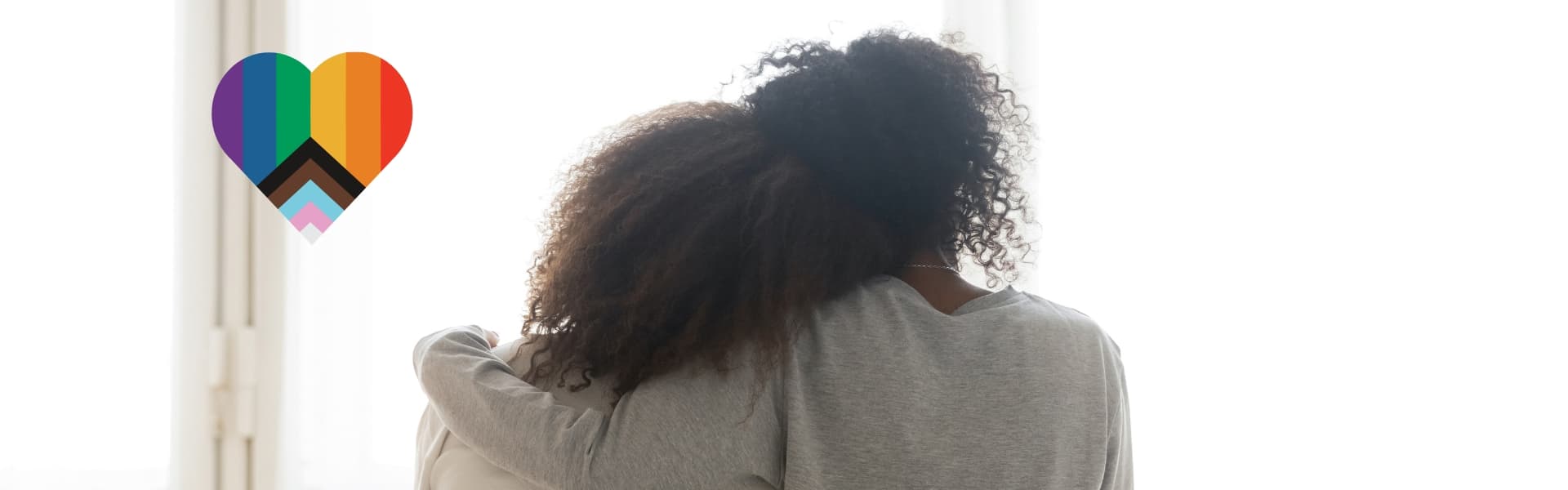
Navigating parenthood: understanding and supporting non-binary children
In our ever-changing society, gender identity and expression are attracting increasing attention and discussion. While the media spotlight focuses on the heated debates around drag queens, a deeper reality is emerging: our own children are questioning their gender identity. And amid this tumult of emotions, one question persists: is this simply a passing trend or a real phenomenon? To shed light on this delicate puzzle, we had the privilege of sharing a sincere moment with Geneviève, Cléo’s mother, 11, who identifies as a non-binary child. In this emotionally charged discussion, we explored the complexities and joys of supporting a child who defies gender norms, seeking to understand their true essence beyond appearances. Note that first names have been changed for confidentiality reasons.
Being non-binary: what is it?
Before going further, let’s take the time to define what non-binarity is as well as some key concepts associated with it (Families in Transition, 2nd edition, CTYS):
Sex:medical term referring to the sex assigned at birth. The most common terms used to define sex are male, female, and intersex.
Gender identity:A person’s intimate feeling that makes them feel they are a man or a woman or another identity.
Gender expression:Refers to how a person chooses to present or express their gender identity to others, often through behaviors, clothing, hairstyle, and bodily characteristics.
Sexual orientation:Sexual attraction felt toward certain people.
Non-binarity:A gender identity that does not strictly correspond to the traditional categories of male and female. Non-binary people may feel outside this gender dichotomy or experience a combination of masculine and feminine elements in terms of gender identity.
Trans identity: a person whose gender identity or gender expression does not align with society’s expectations for the sex that was assigned to them at birth.
Thus, it is important to remember that the notion of non-binarity is related to concepts of gender identity and expression, which are completely different and separate from the concept of sexual orientation.
Gender identity expression in children
Playing with dolls, rolling trucks, dressing up as a princess, or playing baseball… these are children’s games that, because of our social constructs and the stereotypes we maintain, have been associated with a specific gender. Yet most children, regardless of their sex, will at some point play “opposite-sex” games, and this will not impact their gender identity. It is true that in some cases, some may notice signs indicating that a child does not strictly identify as a boy or a girl, while other times there is no apparent indication. It can be games, but also ways of expressing themselves, of dressing. By the way, Geneviève, Cléo’s mother, who was assigned female at birth, recalls:
“The first time Cléo told me how they felt, they were 8 years old. But I had never had any clues before: they played ‘girl’ games, dressed up as a princess, and played all sorts of other games. I have always made a point of allowing my children to explore their identity and to play games, to do what they wanted, regardless of their gender.”, says Geneviève. Then one day, when they were 8, Cléo told me that they didn’t identify as a boy or a girl (neither a man nor a woman). That they were neither and that they didn’t want to be put into a category.”
What annoyed Cléo the most at that time, Geneviève recounts, was mainly the categorization of people they encountered in public, for example at the grocery store.
“It really annoyed them when we were in public and people looked at them and saw their short haircut and pink shoes and they felt judged. As if people wanted to put the child into a category, but that itglitched. It came up a lot in discussions. I tried not to influence them and not to lead them to conclusions. Then, gradually, they asked to have one side of their head shaved, cleaned out their wardrobe and progressively abandoned typically feminine clothing like dresses to turn toward moregender neutraloutfits.”
Reacting to a child’s “coming out” as non-binary
But how do you react when your child questions their gender identity and talks about non-binarity? The first time Cléo spoke about how they felt, Geneviève went through all sorts of emotions. Geneviève admits that the first time Cléo told her how they felt, she had two hours of astonishment, of regrets.
“But that passed very quickly. I was so happy to have a boy and a girl! I kept thinking that the week before they pretended to be an alien from Jupiter and now they were telling me this? Was it serious or just a game? But in the end, over the long term, after several weeks and months, it kept coming back, and it seemed important to them.”
Talking to family
It was at the age of 10 that Cléo wanted to talk to those around them and the rest of the family and asked that the pronoun iel be used.
“The moment they asked that we tell everyone, I had a protective reflex. I took a step back. I was afraid they would be hurt permanently. Can we go slowly, you’ll be bullied… in the end, I wouldn’t ask my child to hide who they are to ‘protect’ them from potential hurt or bullying. And since we take it one thing at a time, it’s easier. And for my child there was never any distress, no tears. It was more a questioning, this is who I am. I never felt it was dramatic. I had to be there to listen and support them, quite simply.”
This listening and support also have major positive impacts: according to a 2012 study, young people questioning their gender identity who report receiving strong parental support for their identity and gender expression are 66% more likely to have good physical health and 70% more likely to have excellent mental health than youth who receive no support. Statistics that certainly make one reflect on the impact of parental support.
Reaction of the extended family
A few weeks before Cléo’s 10th birthday, sensing their child’s request was coming, Geneviève decided to talk about it to Cléo’s father, from whom she was separated, and his partner. “He’s someone who is open-minded and loves his children unconditionally, but he’s a more traditional person. I didn’t know how he would react. I didn’t know if I was doing the right thing, but I thought perhaps it was better that dad be informed. And I was pleasantly surprised. At that time there were trans people at work and he had been made aware. They were very welcoming to Cléo, very open, it was very beautiful from that point of view.”
Cléo’s younger brother, for his part, didn’t really understand at first. “When we told him that we had to start using the pronoun iel, he thought it was Cléo’s new name and that he had to call them that. It was funny.” Then, Cléo asked that their maternal grandparents be informed of the situation.
“When they asked me to tell my mother, I told her on the phone and her reaction was dreadful. ‘This is completely ridiculous, it’s a child, you can’t let them do whatever they want.’ I tried to explain, but it’s not obvious. A week later however, my mother and father had informed themselves, had gone to Google, and understood better. They ended up understanding that it was normal, that it’s something that even happens to children.”“They quickly changed course, but they were so taken aback and didn’t understand at first. And if it had been face to face with my child, maybe it would have been horrible, leaving marks, wounds difficult to repair. I think I did the right thing. I allowed them not to break their ties with my child and today they are very close.”Support from the school
Then, at age 11, Cléo asked that it be discussed with their friends and school staff.
“I know some of my child’s friends had some negative reactions like ‘that can’t be, I’ll keep referring to you as female’ but two days later, it had been digested and it was okay. I know it’s increasingly common in high school, but in elementary school it’s still rare. At their school they are the only one.” “The school staff reacted really well too. Of course there are all kinds of kids, young people who like to mess around, to bully, religious families.. but one of the first things the school wanted to put in place was a ‘safety system’ for Cléo, caring people who would always be there for Cléo if they were victimized, if events happened… All the staff are aware and that really reassured me.”
Then, a month after meeting the school staff, Geneviève went to a parents’ meeting. And her child’s teacher asked if she had noticed a change in Cléo’s behavior.
“In class, it was really night and day. They began to participate, to flourish unlike before, when they were more reserved. Cléo felt that they no longer needed to hide, that they could be themselves. I hadn’t anticipated it but it’s such a wonderful outcome! When you can be yourself and you don’t have to hide you feel so much better, you are so much more in harmony with your environment.”
The challenges and the beauty of parenting and supporting a non-binary child
It is true that being a parent is not always restful. And that is even more the case with a child who questions their identity. One of the challenges according to Geneviève was knowing how to position herself and address more complex notions like the onset of puberty, changing legal sex, etc., with her child.
“Young children don’t have the tools or vocabulary to explain these things to us. It’s really the parent’s responsibility to inform themselves, to seek testimony from trans or non-binary people to better understand what is happening with their child without the child having to explain what’s happening because they don’t have the vocabulary.”
“For Cléo, it would already be possible to change their gender on legal documents but I prefer to wait until after puberty. I know the changes of puberty will arrive, I talked to them about it, talked about the changes that would come, about blockers that could be used but for them, that doesn’t seem important. For them it’s their identity that is important, not the physical. We’ll see later if the need changes.”
It is important to emphasize here that each transition is unique, and that there are no “right” or “wrong” ways to transition. Some people feel the need to make changes to their physical appearance while others simply do not. And while surgery can be used by adults during gender transitions, there are also other medical solutions with reversible consequences to delay puberty. These solutions allow more time for children and adolescents to reflect and understand the options available to them and to be able to make more informed choices.
The positive side of things
Although this may seem complex, being the parent of a
gender-fluid,
transgender or agender child is not only difficult or negative, quite the opposite.“Having a child who is truly 10, now 11, who is capable of asserting, of declaring in front of everyone who they are and who is not afraid to be different. I am so proud to have a child so courageous and so good at being themselves! It makes me want to cry every time.”“I don’t know how I see the future, but I am still very confident. I don’t assume that Cléo’s life will be more complicated or difficult because of this. And as for thinking that it’s a trend, I don’t think a child like Cléo, so young, is ‘following a trend.’ They’re the first in their school, even if it’s true that it’s more and more present in high schools. One could think it’s a trend. But maybe it’s also because those categories simply no longer suit us!”
“We all suffer from the boxes we are put into. We have all suffered from the rigidity of the definition of our gender at one time or another. If the new generation breaks out of that, I don’t think we should think and stop and say ‘it’s just a trend.’ Maybe precisely they want to free themselves. It’s like saying recycling is a trend, that going to a therapist to fix your problems is a trend. Well maybe then everyone should do it!”
Receiving support from mental health professionals
Although exploration and development of gender identity in childhood is a completely normal period, it is important to recognize that it can also be a complex and delicate time, both for parents and for the child. When a person questions their gender identity, they may experience gender dysphoria, that is, a mismatch between their felt gender identity and the sex assigned to them at birth, which is associated with a feeling of distress or discomfort. Mental health professionals specialized in gender issues can help. These experts can support the child in their reflections, help them navigate the complex and sometimes contradictory emotions they may experience. They can also provide valuable support to families and accompany each family member at their own pace.
Some parents will need more time and support and will experience their child’s gender affirmation somewhat like a grieving process. Professionals provide informed guidance and strategies to foster a caring and inclusive environment where the child can express themselves freely and be supported in their journey of exploring their gender identity. Their expertise plays an essential role in supporting the child and their family throughout this process.
In short
If you or your child feel the need, know that Familio has mental health and social services experts specialized in gender identity questions who are ready to help you. Our qualified professionals are available to provide support tailored to parents and children going through this period of gender identity exploration. Whether you have questions, concerns, or are simply seeking practical advice, our team is here to offer you a safe and caring space. We understand the challenges you may face and are committed to supporting you throughout this journey, offering specialized resources and personalized support. Do not hesitate to
contact us
for more information on how our experts can help you in this essential process for the well-being of your child and family.Some resources for parentsAre you the parent of a non-binary, transgender, or questioning child? Here are some resources that may interest you:
Central Toronto Youth Services (2021), “Families in TRANSition: a resource guide for families of transgender youth,” 2nd edition.
https://gendercreativekids.com/upload/ressources/files/CTYS-FIT-Guide-2020-French.pdf
- Coalition of LGBT+ Familieswww.familleslgbt.org
- Young Gender Creative Identities – Gender Creative Kids 5425, rue de Bordeaux, #217, Montréal (Qc) H2H 2P9www.enfantstransgenres.ca
- info@contactgckc.com
Divergenres (Quebec) www.divergenres.org - divergenres@gmail.comwww.divergenres.org divergenres@gmail.com
Related articles
Preventing mental fatigue: take care of your health to avoid burnout
Between personal responsibilities, the workplace, unexpected events, and an often demanding pace of life, our brains are now under constant strain. Notifications, screens, multitasking, and the need for instant gratification sometimes leave little room to truly unwind or recharge. This reality is becoming increasingly prevalent. In 2023, more than 4.1 million Canadian workers reported experiencing high levels of work-related stress and daily overload.

Understanding grief: stages, emotions and the grieving process | Familio
When pain returns as time passes, it’s normal to wonder why. We hear about the stages of grief, as if simply going through them one by one would make things better. As if there were a "right way" to grieve. Yet grief does not follow a straight line. It can come back in waves, take different forms, and be experienced very differently from one person to another. Understanding what is happening can help put words to what we feel, recognize returning emotions, and know when to seek support.
Caregivers: the often invisible pillars of our society
Supporting a loved one experiencing loss of autonomy, caring for an ill spouse, or being present for a child with particular challenges — for many caregivers, these situations are simply part of daily life. Learn about caregivers, the impact on their mental health, and how to better support them.