

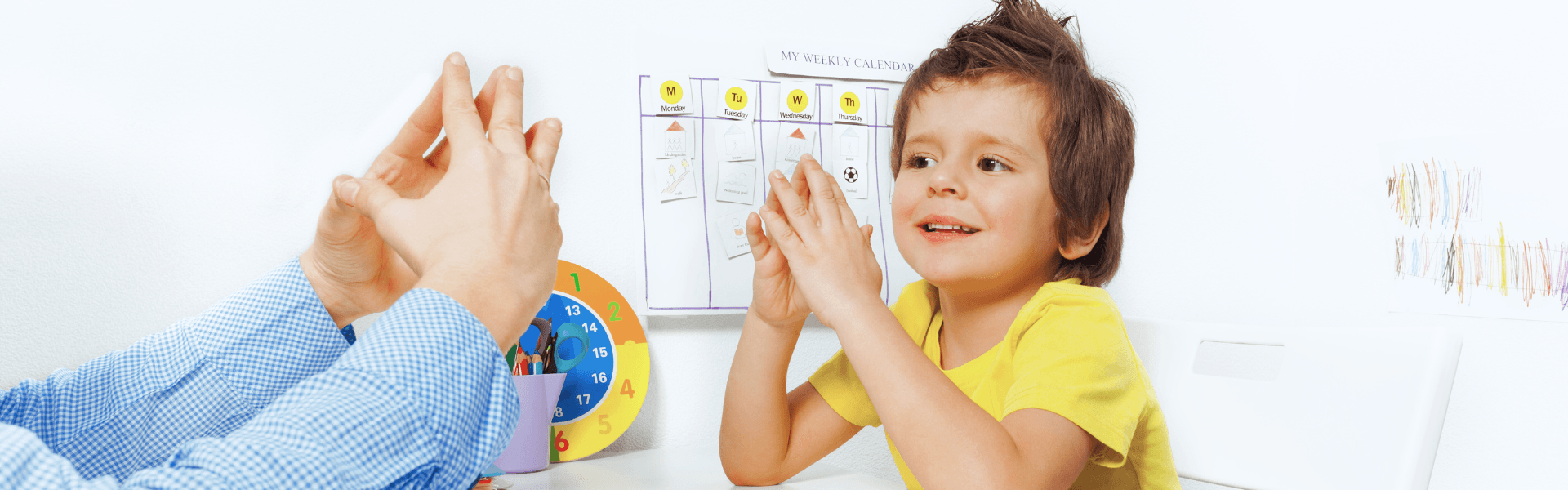
What if my child has an autism spectrum disorder (ASD)?
With the right tools and the support of committed professionals, it is possible to turn these challenges into opportunities. At Familio and Orpair, we are here to support you at every step of the journey.
What is autism spectrum disorder (ASD)
Autism spectrum disorder is a neurodevelopmental disorder that encompasses a wide range of characteristics, thus reflecting the diversity of profiles. Previously, Asperger's syndrome was considered a form of high-functioning autism in the absence of a language disorder. However, today all these diagnoses are grouped under the term ASD.
This spectrum illustrates that each child is unique, with their strengths, needs and particularities, and that symptoms can vary considerably from one child to another. Some children may display repetitive behaviors or restricted interests while others excel in specific areas, such as mathematics or memorization.
In general, a child with ASD will need a safe and structured environment to develop their abilities and form connections with others.
Some key statistics
ASD affects about 1% of the Canadian population, or roughly 1 child in 66 among youth aged 5 to 17. In Quebec, this rate rises to 2.3% among youth aged 1 to 24. Boys are diagnosed about four times more often than girls, a difference partly attributed to diagnostic biases.
Although these figures may suggest a significant increase in cases, it's important to look further. They are notably linked to greater awareness, improved screening practices, and broadened diagnostic criteria.
To learn more, consultHealth Canada,Autism Montreal orAutism Canada.
What are the signs of autism spectrum disorder (ASD) in children?
The signs of ASD vary from one child to another, but they can be grouped into four main categories:
1. Communication disorders and difficulties in social and/or emotional interactions
- Delayed or absent language development.
- Atypical speech, repetition of words or phrases (echolalia).
- Difficulty initiating a conversation
- Difficulty with reciprocity in a conversation (may talk about their interests but not necessarily consider the other person in the exchange)
- Difficulties understanding others' interests and emotions.
- Limited interaction with other children or adults.
- Little interest in peers.
- Limited eye contact.
- A need for predictability in their interactions.
- Nonverbal cues, such as facial expressions or gestures, present a challenge.
- They may be interested in others but approach interactions in a sometimes awkward way.
3. Restricted and/or repetitive behaviors/interests/activities
- Repetitive movements, such as flapping, rocking.
- Fascination/intense interest in specific topics (example: dinosaurs).
- Rigid need for routines, causing anxiety in the event of change.
- Eating the same foods repeatedly and only those foods
- Difficulty managing transitions
4. Sensory particularities
- People with ASD may experience sensory hypersensitivity or hyposensitivity (sounds, textures, lights, smells, temperatures)
These characteristics can manifest to varying degrees and change over time. Hence the importance of a comprehensive and personalized assessment.
First steps: Initial consultation with a pediatrician or specialist
If you suspect ASD in your child, the first step is to consult a health professional, such as a pediatrician, a psychologist, or a neuropsychologist. They are the only ones who can make a diagnosis.
In the public system in Quebec, a medical referral is often required. However, in the private sector, you simply need to find a specialist in your area. In some cases, this can speed up the process. However, fees apply to the different services.
The evaluation and diagnostic process: what to expect?
An evaluation for ASD is comprehensive and rigorous, aimed at establishing an accurate differential diagnosis. It may extend over several weeks. It allows for a precise picture of the child's needs and strengths, thus guiding future interventions.
It is essential to understand that comorbidity is closely monitored in this process. If other hypotheses are present, the pediatrician, child psychiatrist, or psychologist/neuropsychologist will analyze the possibilities of other developmental disorders such as ADHD, a learning disorder, language disorder, intellectual disability, or others.
The reason is simple but crucial. For example, a child suffering from a severe language disorder may exhibit behaviors that appear similar to those of autism spectrum disorder (ASD), which can complicate the diagnosis. The symptoms of the two disorders can overlap, be amplified, or be imitated, leading to possible confusion between them.
Examinations and multidimensional professional assessment
Overall, evaluations and examinations include:
Medical history and antecedents (anamnesis): Gathering the child's complete developmental history, from birth.
- Symptoms: If there is doubt about ASD, a second meeting takes place. This focuses on the symptoms during the child's development.
- Tests: ADOS-2 / ADI-R, two standardized observational tools for the diagnosis of autism that measure social, communication and relational skills as well as restricted/stereotyped behaviors.
- Observations in the living environment: Analysis of interactions in the classroom or at home to observe ASD symptoms.
- Exclusion of other disorders: Evaluation of possible comorbidities, such as ADHD or language disorders.
The diagnosis of autism spectrum disorder
A complete cognitive assessment of your child ensures optimal care toward the expert or group of experts best suited to their condition.
The reports that they provide to you afterwards are valuable for their learning journey at school and at home. Each professional presents clear results and personalized recommendations. Thus, the challenges your child faces are clarified, as well as their unique strengths.
After the diagnosis: How to move forward and where to start?
Parents always play a key role in supporting a child with ASD. Depending on whether the diagnosis is made in the public or private system, the steps to access services may vary. The public system initiates automatic steps towards professionals.
In the private sector, this may differ if you do not have the strength of a multidisciplinary network, such as those of Familio and the Orpair clinic. Once your child has access to the group of experts, they are referred to each of those who enable them to reach their full potential.
It is then up to you to support them and progress step by step with them. Then, to celebrate all the small victories to praise and encourage them.
Which professional should you consult to support your child's development?
Each child with ASD has specific needs that require the intervention of various professionals. By taking a comprehensive picture of your child, it is possible to direct them to the right group of experts. Familio and Orpair give you access to each of them to make a difference in your child's life and in yours.
Our experts are experienced with children who have special needs. They have developed great compassion for this young clientele.
Psychologist
They help improve social skills and manage behaviors. A cognitive-behavioral approach is often favored to work on reactions and routines.
Social worker
They support and accompany families in understanding the diagnosis received. They also offer practical tools and put measures in place to support the child and the parents, as well as direct them to support resources if needed.
Parent/family coach
They accompany parents in adapting parent-child and family dynamics, offering tailored educational strategies to meet the child's unique needs. They sometimes work in concert with the psychoeducator or the social worker.
Psychoeducator
Specializing in adaptation strategies, they intervene directly with the child to develop tools for emotional and behavioral regulation (calming). They can even carry out observations in the family environment.
Occupational therapist
They work on motor skills and sensory sensitivities. They adapt the child's functional environment, at home and at school, to improve their comfort and autonomy.
Specialized educator
They collaborate with the psychoeducator, working mainly in preschool settings (such as CPEs) and schools or in CISSS and CIUSSS. They act as field agents for crisis management, adaptive strategies, and the implementation of tools to facilitate daily routines.
Learning specialist
They support all aspects (disorders, difficulties, delays, rehabilitation) of school learning by adapting educational content to the child's abilities.
They target their challenges in reading, writing, or mathematics. Through practical scenarios (exercises, tests) and interprofessional collaboration, they help children with ASD find the ideal way for them to learn and progress.
Speech-language pathologist
Their interventions target language and communication difficulties, which are essential for social and school flourishing. They assist from the preschool age and even support mathematical aspects (dyscalculia). The speech-language pathologist also helps the child with ASD with unspoken aspects and the understanding of emotions (inference). They can make a diagnosis specific to their speech-language expertise.
Each professional plays a unique and complementary role, contributing to a comprehensive approach to meet the varied needs of children with ASD.
A path toward fulfillment
Receiving an ASD diagnosis can generate a mix of emotions: relief, worry, doubt, or even uncertainty about the future. However, this diagnosis is an opportunity to better understand your child and identify the resources that will help them thrive fully.
With appropriate support and a team of competent professionals, children living with ASD can develop their skills, overcome their challenges and find their place in society. At Familio and the Orpair Clinic, we are committed to providing personalized support to each family, in collaboration with passionate and caring experts.
Understand that you are no longer alone. You have finished searching for answers to your questions. Together, we are building a more inclusive and serene future for each child and their family. All you need to do isrequest a consultation. Are you a mental health or social services professional passionate about supporting children and families?Join the Familio team! We are looking for caring and committed experts to make a real difference in the lives of children living with ASD and their loved ones. Together, let's build a future where every child can fully thrive.
Resources
Autism Canada. (n.d.).https://www.autismcanada.ca
Clinique Orpair. (n.d.). Understanding inference in people with autism spectrum disorder.https://www.cliniqueorpair.com/post/la-compr%C3%A9hension-des-inf%C3%A9rences-chez-les-personnes-ayant-un-trouble-du-spectre-de-l-autisme
CHU Sainte-Justine. (n.d.). Info-Family Guide: Pervasive developmental disorders.https://enseignement.chusj.org/fr/bibliotheques/les-Ressources/Guide-Info-famille?NodeAlias=Troubles-envahissants-du-developpement
Deslauriers, S. (2018). Let me explain... Autism spectrum disorder. Midi trente.
Quebec Autism Federation. (n.d.).https://www.autisme.qc.ca
Quebec Autism Federation. (n.d.). Resource bank.https://www.autisme.qc.ca/ressources/
Charles Lafortune Foundation. (n.d.).https://www.fondationautisteetmajeur.com
Harrisson, B., & St-Charles, L. (2012). Autism explained to non-autistics. Chenelière Éducation.
Leroux-Boudreault, A., & Poirier, N. (2019). 10 questions on... Autism spectrum disorder in children and adolescents: Better understanding to better intervene. Presses de l’Université du Québec.
Ouellet, R. (2020). Autism – The toolbox: Strategies and techniques to support an autistic child. Éditions de Mortagne.
Rudolph, S., & Royer, D. (2016). Autism – Arthur's stripes. Mijade.
Sources
Autisme Centre-du-Québec. (n.d.). Statistics.https://www.autisme-cq.com/quest-ce-que-letsa/statistiques/
Autisme Montréal. (n.d.). Help for parents: The diagnosis.https://autisme-montreal.com/aide-aux-parents/le-diagnostic/
Autisme Ontario. (n.d.). Calculation of the ASD prevalence rate.https://www.autismontario.com/fr/cest-quoi-lautisme/taux-de-prevalence
Integrated University Health and Social Services Centre of the Capitale-Nationale. (n.d.). FAQ on autism spectrum disorder (ASD).https://www.ciusss-capitalenationale.gouv.qc.ca/services/deficience-handicap/tsa/faq
Government of Canada. (2018). Autism spectrum disorder among children and adolescents in Canada 2018: A report from the National Autism Spectrum Disorder Surveillance System.https://www.canada.ca/fr/sante-publique/services/publications/maladies-et-affections/trouble-spectre-autisme-enfants-adolescents-canada-2018.html
Ministry of Health and Social Services. (2017). Towards better integration of care and services for people with a disability: Presentation of the DI-TSA-DP Program.https://publications.msss.gouv.qc.ca/msss/fichiers/2017/17-824-04W_accessible.pdf
Related articles

Preventing mental fatigue: take care of your health to avoid burnout
Between personal responsibilities, the workplace, unexpected events, and an often demanding pace of life, our brains are now under constant strain. Notifications, screens, multitasking, and the need for instant gratification sometimes leave little room to truly unwind or recharge. This reality is becoming increasingly prevalent. In 2023, more than 4.1 million Canadian workers reported experiencing high levels of work-related stress and daily overload.

Understanding grief: stages, emotions and the grieving process | Familio
When pain returns as time passes, it’s normal to wonder why. We hear about the stages of grief, as if simply going through them one by one would make things better. As if there were a "right way" to grieve. Yet grief does not follow a straight line. It can come back in waves, take different forms, and be experienced very differently from one person to another. Understanding what is happening can help put words to what we feel, recognize returning emotions, and know when to seek support.
Caregivers: the often invisible pillars of our society
Supporting a loved one experiencing loss of autonomy, caring for an ill spouse, or being present for a child with particular challenges — for many caregivers, these situations are simply part of daily life. Learn about caregivers, the impact on their mental health, and how to better support them.